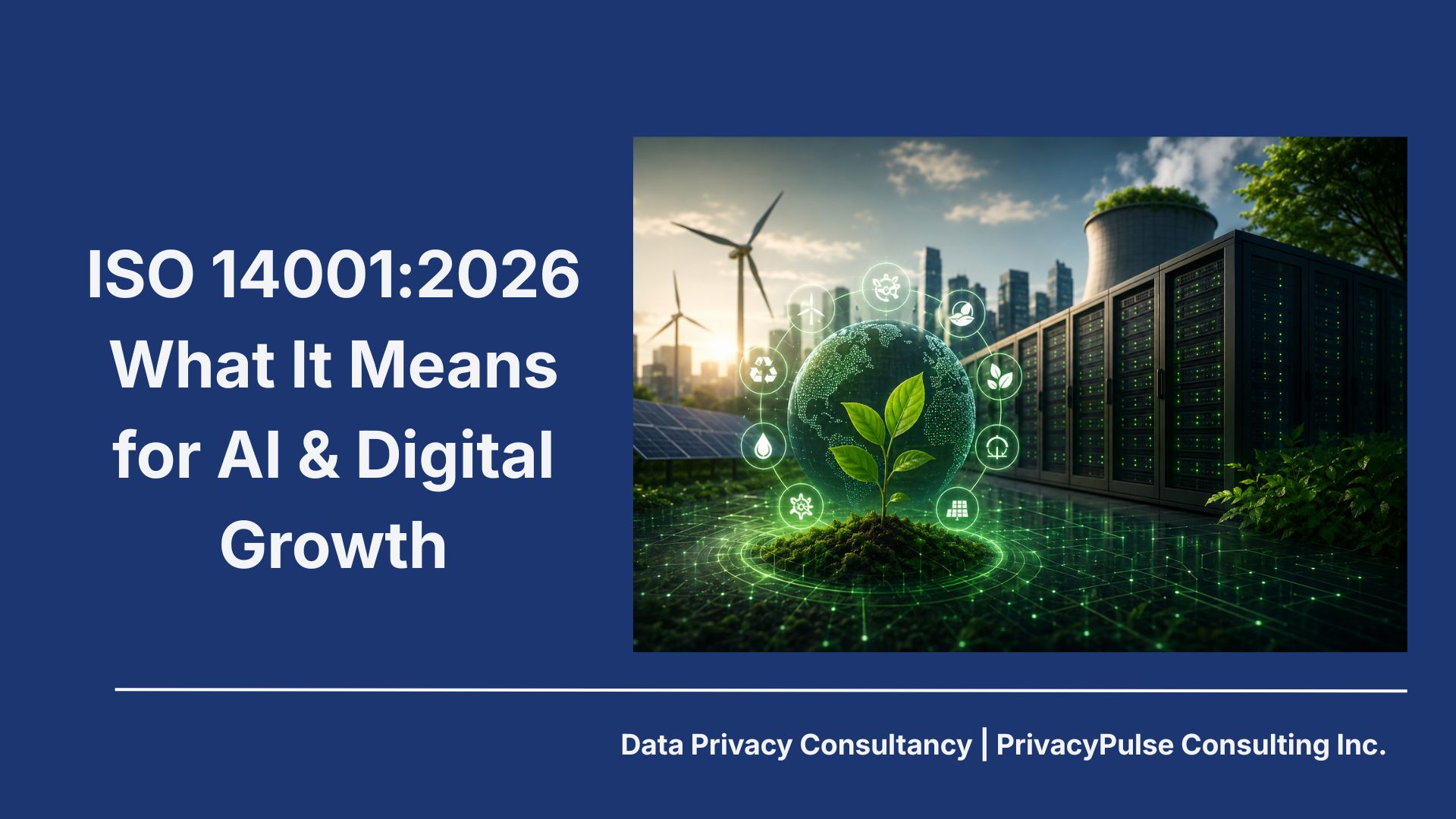
Digital transformation is entering a new phase. AI, cloud systems, and data-driven services are becoming central to how businesses grow, compete, and serve customers. But these technologies do not run in isolation. They depend on large digital infrastructure, including data centers, servers, cooling systems, hardware, and reliable energy supply.
As countries invest more in AI infrastructure and sovereign cloud systems, environmental responsibility is becoming an important part of digital planning. It is no longer only about building faster systems. It is also about building systems that are reliable, efficient, and sustainable.
This is where ISO 14001:2026 becomes relevant.
What Changed in ISO 14001:2026?
The revised ISO 14001:2026 framework is expected to help organizations manage their environmental impact in a more structured and practical way. The 2026 revision aims to keep the standard relevant to today’s environmental challenges, including climate change, resource pressure, biodiversity concerns, and wider sustainability expectations. It also brings more clarity to the requirements, making them easier to apply, audit, and connect with other management system standards.
For digital and AI-led businesses, the revised standard is especially relevant. It encourages companies to consider climate-related risks, energy efficiency, resource use, and nature protection when planning their operations. It also places a stronger focus on the full life cycle of products and services, from making hardware to running data centers and disposing of old equipment.
Supply chains and externally provided services also receive more attention. This matters because AI infrastructure often depends on servers, chips, cooling systems, cloud providers, and technology vendors from different parts of the world.
The 2026 version also gives more importance to change management and measurable environmental performance. When businesses change their technology, vendors, infrastructure, or processes, they need to consider whether those changes may affect their environmental impact.
Companies that already follow the older 2015 version have until April 2029 to switch. For businesses using AI, cloud services, or data-heavy systems, this update is a useful reminder that environmental responsibility should be part of long-term digital strategy.
The Growing Energy and Water Needs of AI
AI systems need strong computing power. Whether it is a chatbot, image generator, data analysis tool, or automated business system, it depends on servers and data centers running continuously in the background.
Recent estimates show that data centers consumed around 415 terawatt-hours of electricity in 2024, representing about 1.5% of global electricity demand. By 2030, this could more than double, reaching levels comparable to the current annual electricity consumption of a major economy such as Japan.
AI is one of the key reasons behind this rising demand. Training and running large AI models requires powerful chips, high-performance servers, cooling systems, water, and regular hardware upgrades. In regions where water resources are limited or energy demand is already high, this can create pressure on local infrastructure and communities.
These numbers show why environmental planning is becoming important for AI and digital infrastructure. Energy use, water use, and hardware life cycles are no longer back-office issues. They are becoming part of business risk, cost planning, and public trust.
Sovereign Clouds, AI Infrastructure, and Sustainable Growth
Many countries are now investing in sovereign cloud systems and local AI infrastructure. These systems are designed to keep data within national borders, support local laws, and give governments and businesses greater control over digital services.
Earlier, sovereign cloud discussions were mainly linked to data security, privacy, and national control. Today, they are also connected with environmental planning. When countries build local cloud and AI infrastructure, they also need to consider location, energy supply, cooling methods, water use, and sustainability reporting.
In the GCC region, large-scale AI and data center projects are already becoming part of national digital strategies. Projects such as Stargate UAE in Abu Dhabi and Saudi Arabia’s HUMAIN initiative show how quickly AI infrastructure ambitions are expanding in the region.
India is also seeing strong momentum in AI and data center development. Major business groups, including Reliance, Adani, Tata, and Larsen & Toubro, have announced or discussed large-scale investments linked to AI infrastructure, data centers, and renewable-powered digital growth.
These developments create major opportunities for innovation, digital sovereignty, and economic growth. At the same time, they also show why energy efficiency, cooling methods, water consumption, renewable energy use, and transparent reporting need to be considered from the beginning.
Helpful Standards Working Together
ISO 14001:2026 is not the only framework that can support responsible digital growth. Other standards and guidance can also help organizations measure and improve the environmental impact of their technology systems.
For example, AI-related sustainability guidance can help organizations understand the environmental impact of AI systems across their life cycle. This may include the energy used for training and running AI models, the hardware required, cooling needs, carbon impact, water use, and electronic waste.
Data center efficiency measures can also help businesses track how effectively their infrastructure uses electricity and water. Metrics such as Power Usage Effectiveness and Water Usage Effectiveness can give organizations a clearer picture of how their digital operations are performing.
Together, these tools can help businesses move from general sustainability statements to measurable action.
Why This Matters for Businesses
Businesses today depend heavily on digital systems. Cloud platforms, AI tools, data analytics, automation, customer platforms, and online services are now part of daily operations across many industries.
This means environmental responsibility is becoming relevant not only for technology companies, but for almost every business using digital infrastructure.
If the systems behind a business consume large amounts of energy or place pressure on local resources, it can create long-term risks. These may include higher costs, operational delays, reputational concerns, stricter regulatory expectations, or questions from customers and investors.
On the other hand, businesses that take environmental planning seriously can build stronger trust. They can show that their digital growth is not only secure and efficient, but also responsible and sustainable.
Simple Steps Businesses Can Take
Businesses do not need to wait for pressure from regulators or customers. They can start with practical steps now:
- Review cloud and data center partners: Understand how your service providers manage energy use, cooling, water consumption, renewable energy, and environmental reporting.
- Include sustainability in vendor checks: When choosing cloud, AI, or technology vendors, ask questions about their environmental practices, not only their pricing and technical features.
- Connect digital planning with environmental planning: AI, cloud, and data projects should not be planned separately from sustainability goals. Both should be considered together from the beginning.
- Track measurable indicators: Businesses should look for clear data on energy use, water use, carbon impact, and hardware life cycle where possible.
- Build internal awareness: Technology, legal, compliance, procurement, and sustainability teams should work together. Environmental responsibility should not sit with only one department.
- Plan for long-term resilience: Energy costs, water availability, climate risks, and regulatory expectations can affect digital operations. Planning early can reduce future disruption.
Final Thoughts
AI, cloud systems, and data centers will continue to shape the future of business. But as digital infrastructure grows, environmental responsibility must grow with it.
For businesses, the goal is not to slow innovation. The goal is to build digital systems that are efficient, reliable, and sustainable from the beginning.
Environmental governance is no longer separate from digital transformation. It is becoming part of how modern businesses build trust and prepare for the future.
_______________________________________________________________________
Build digital growth on a foundation of privacy, trust, and responsibility. PrivacyPulse helps businesses protect data while preparing for the future.
Reference
- ISO 14001:2026 Environmental management systems
- ISO 14001:2026 Transition | Key Changes and How to Prepare
- ISO 14001:2026 – Environmental management systems – Requirements with guidance for use
- Energy demand from AI – Energy and AI – Analysis – IEA
- https://www.aitooldiscovery.com/ai-infra/ai-data-center-power-consumption
- AI is set to drive surging electricity demand from data centres while offering the potential to transform how the energy sector works – News – IEA
- Introducing Stargate UAE | OpenAI
- Saudi Arabia’s AI co. Humain looking for US data center equity partner, targets 6.6GW by 2034 with subsidized electricity
- India AI Summit: Ambani’s Reliance to Invest $110 Billion in AI Infrastructure – Bloomberg
- India To Invest $200 Billion In AI Infrastructure: AI Impact Summit