East Africa’s digital economy is among the fastest growing in Africa. Mobile money now processes billions annually, fintech platforms are expanding financial access to millions of previously unbanked users, and governments are increasingly deploying biometric digital IDs and AI-driven public services.
In this environment, privacy has become central to trust. It determines whether people adopt digital systems confidently or resist them. Without effective safeguards, digital innovation risks shifting from inclusion to exploitation.
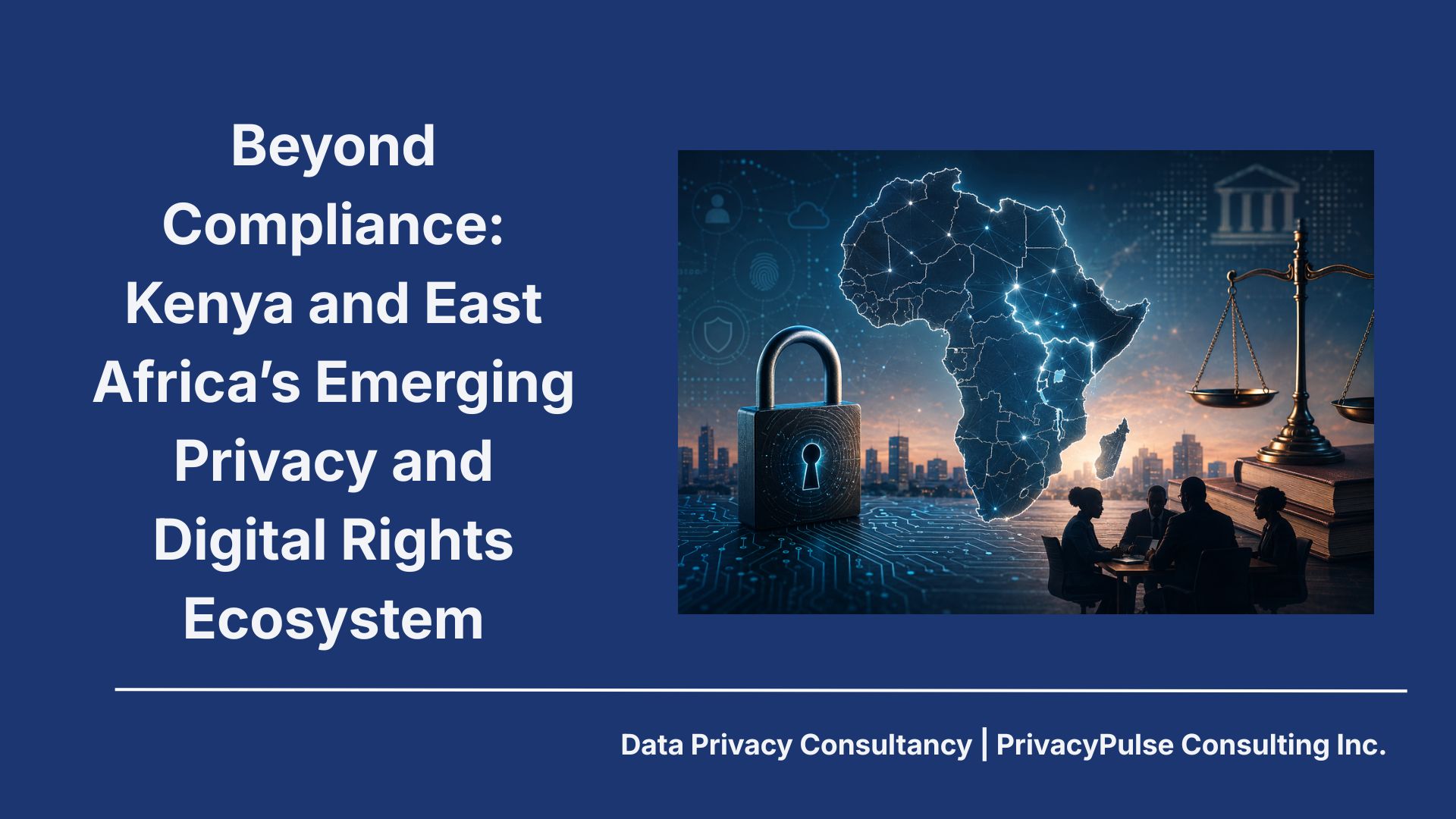
Kenya has emerged as a key player in the region. Its Data Protection Act (DPA) 2019 has set the direction for neighbouring countries, while its regulator has moved towards meaningful enforcement. What makes Kenya notable is not merely the existence of law on paper, but the growing ecosystem of regulators, civil society organisations, and academic institutions working together. This article examines that ecosystem, its strengths, existing gaps, and the practical path ahead.
Evolution of Privacy & Digital Rights in East Africa
Privacy and digital rights in East Africa did not develop overnight. The foundation was first laid through constitutional protections, notably Kenya’s Article 31 (2010). This was followed by comprehensive data protection laws across the region: Kenya (2019), Uganda (2019), Rwanda (2021), Tanzania (2022, effective 2023), and Ethiopia (2024).
While aligned with global frameworks such as the GDPR, these laws are adapted to local realities shaped by mobile-first economies and rapid digital financial adoption.
At the regional level, the East African Community’s EARDIP initiative is gradually promoting harmonisation, particularly on cross-border data flows, signaling a shift toward a more integrated digital market.
Kenya’s Privacy Ecosystem
Kenya’s DPA 2019 is built on core principles such as lawfulness, fairness, data minimisation, purpose limitation, and accountability. It also strengthens individual rights and extends protections to sensitive data and children data.
The Office of the Data Protection Commissioner (ODPC), led by Data Commissioner Immaculate Kassait, has moved from awareness-building to active enforcement. In 2025, it issued 96 determination complaints, almost double the previous year; and awarded over KES 30 million in compensation. A large share of complaints originated from digital financial services, particularly mobile lending, highlighting persistent issues around consent and data use.
Compliance remains uneven. While large organisations and banks have established structured privacy programmes, many SMEs still view compliance as a regulatory burden rather than a governance requirement. Skills shortages, cost concerns, and uncertainty around cross-border data transfers continue to affect implementation.
To address this, the ODPC has introduced draft guidance on key areas including data transfers and DPO requirements for public consultation.
Supervisory Authorities Across East Africa
Regulators across East Africa are at different stages of maturity. Kenya’s ODPC leads in enforcement activity and precedent-setting decisions. Uganda’s PDPO is becoming more assertive, including requiring global platforms like Google LLC to register locally and clarify data transfer practices.
Tanzania’s authority is gradually strengthening compliance through registration enforcement. Rwanda integrates data protection within its cybersecurity framework, while Ethiopia remains focused on building institutional capacity under its newer legal framework.
Across the region, legal alignment with international standards is a shared strength, but challenges persist around funding, technical capacity, and institutional independence.
EARDIP-led engagements are helping regulators share experience and move toward coordination, including early discussions on mutual adequacy recognition to support smoother cross-border data flows.
The Role of Digital Rights Organizations & Civil Society
Civil society organisations play a much bigger role than simply criticising policies or regulators. They help translate digital rights into practical action and make privacy more understandable for ordinary people. Across East Africa, several organisations are actively shaping conversations around privacy, digital governance, and internet freedom.
Organisations such as CIPESA, KICTANet, Paradigm Initiative, ARTICLE 19 Eastern Africa, and POLLICY contribute through research, advocacy, capacity-building, and policy engagement.
Their work ensures that privacy is not limited to legal frameworks but is translated into public awareness and accountability. This is especially important in fintech and mobile-money ecosystems, where consent is often embedded in complex or opaque terms.
Beyond advocacy, these organisations influence enforcement through complaints, policy input, and grassroots campaigns, strengthening the link between regulation and real-world impact.
Universities, Academia & Research Institutions
Academic institutions are increasingly important in addressing the region’s skills gap in data protection and digital governance.
Strathmore University’s CIPIT plays a leading role through specialised training, AI governance initiatives, and policy-oriented research that informs regulators such as Kenya’s ODPC. Other universities across Kenya and the region are embedding privacy, cybersecurity, and digital law into their curricula and expanding legal clinics and research programmes.
These institutions are building the next generation of DPOs, compliance professionals, and policy experts needed to support implementation of data protection frameworks.
The Future of Privacy in Kenya & East Africa
The region is moving toward deeper digital integration, supported by Kenya’s regulatory leadership and EARDIP’s harmonisation efforts. However, implementation challenges remain, including uneven enforcement capacity, fragmented cross-border governance, and emerging gaps in AI regulation.
Digital identity systems, fintech platforms, and mobile-money services continue to raise practical concerns around consent, exclusion, and data misuse, particularly in low-literacy environments.
The next phase will depend less on new laws and more on effective implementation across institutions and sectors.
Key opportunities include regulatory sandboxes for AI, cross-border adequacy frameworks, public awareness initiatives, and capacity-building for DPOs.
Civil society and academia will remain critical in bridging policy and practice, ensuring accountability and strengthening institutional capacity.
Final Thoughts
East Africa’s privacy framework is evolving into a multi-stakeholder system rather than a purely legal one. Kenya’s enforcement experience shows what is possible, while civil society and academia strengthen awareness and expertise.
The key test ahead is not legislation, but execution; whether institutions coordinate effectively, businesses operationalise compliance, and users meaningfully exercise their rights.
In the end, sustainable privacy protection depends on systems working together, not laws working alone.
_______________________________________________________________________
Build digital growth on a foundation of privacy, trust, and responsibility. PrivacyPulse helps businesses protect data while preparing for the future.
Reference
- Determinations 2025 – Office of the Data Protection Commissioner (ODPC)
- Data Society (reports)
- Ugandan Regulator Finds Google in Breach of Country’s Data Protection Law, Orders Local Registration
- State of Internet Freedom In Africa Report
- Data Protection Course – Nairobi
- Artificial Intelligence – CIPIT
- National Consultations for the Harmonisation of Cross Border Data Flows Frameworks in the East African Community-East African Regional Digital Integration Project
- https://www.pdpc.go.tz/media/media/PUBLIC_NOTICE_MARCH_2026.pdf
- National Cyber Security Authority | NCSA officially launches the Data Protection Office